Accounting firms depend on technology every day. From tax preparation and payroll to client communications, document management, accounting software, and electronic filing, technology is at the center of modern CPA practices. When systems are slow, unavailable, or vulnerable to cyber threats, the impact can extend far beyond an IT department. It can affect employees, clients, deadlines, productivity, and the reputation of the firm.
This is why IT Support for CPA Firms needs to go beyond basic computer troubleshooting. Accounting practices need dependable technology, strong cybersecurity, responsive technical support, and systems that can handle sensitive financial and personal information.
For CPA firms in Dallas, TX, professional IT support can provide a proactive approach to technology management. Instead of waiting for problems to interrupt tax preparation or client services, firms can work with an experienced IT provider to maintain systems, strengthen security, support employees, and plan for future technology needs.
Why CPA Firms Need Specialized IT Support
CPA firms have technology requirements that can be different from those of many other businesses. Accounting professionals routinely work with confidential financial information, Social Security numbers, tax records, payroll information, bank information, business records, and other sensitive client data.
That makes cybersecurity and reliable technology especially important.
The IRS specifically warns that tax professionals are targets for cybercriminals seeking sensitive client information. According to the IRS, federal law requires professional tax preparers to create, implement, and maintain an information security plan to protect client data.
For CPA firms, IT support should therefore address both everyday technology needs and the security responsibilities associated with handling sensitive information.
A specialized approach to CPA firm IT support can help accounting practices address issues such as:
- Cybersecurity and data protection
- Secure access to accounting and tax applications
- Network reliability and performance
- Cloud application management
- Email security and phishing protection
- Data backup and recovery
- Employee IT support
- Device and endpoint management
- Software updates and patch management
- Business continuity planning
How IT Support Helps CPA Firms Protect Client Data
Protecting client information should be a fundamental part of an accounting firm’s technology strategy. A security incident can potentially expose confidential information, interrupt operations, and create significant business and regulatory concerns.
Cybersecurity for CPA firms should not depend on a single antivirus program or firewall. Effective security involves multiple layers of protection working together.
The IRS provides a Tax Security 2.0 cybersecurity checklist for tax professionals that includes measures such as multi-factor authentication, firewalls, antivirus protection, backups, encryption, and secure virtual private networks.
A professional IT provider can help CPA firms implement and maintain these types of safeguards. This may include managing endpoint security, monitoring systems, configuring access controls, applying security updates, protecting email accounts, and helping employees recognize common cyber threats.
The goal is to create a layered security environment rather than relying on a single defensive technology.
Multi-Factor Authentication
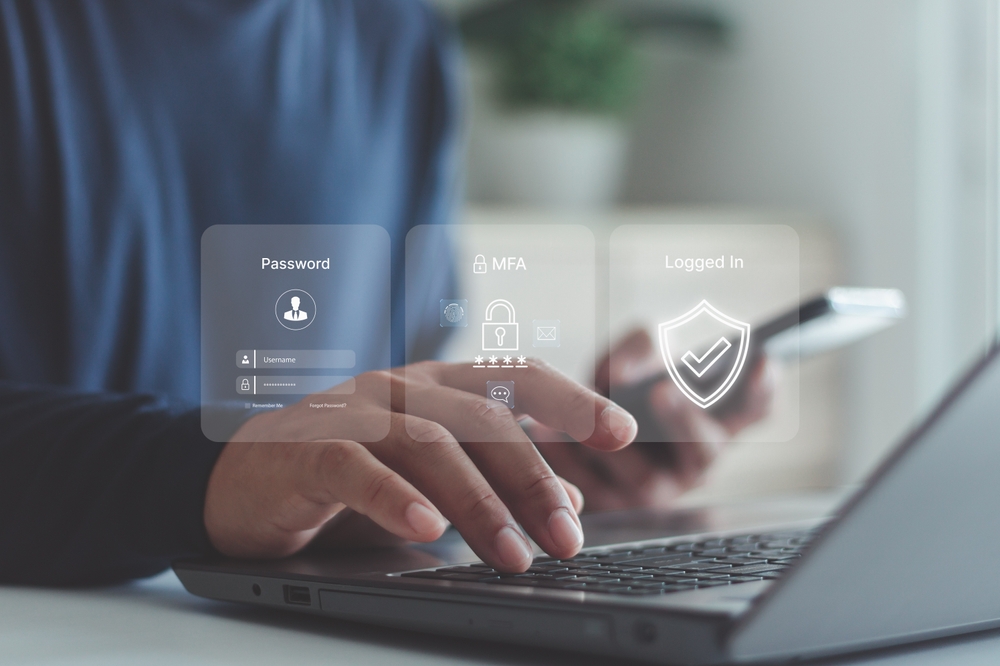
Passwords alone are not always enough to protect business accounts. Multi-factor authentication adds another layer by requiring users to verify their identity using an additional factor.
For CPA firms, MFA should be considered for important systems such as email, cloud applications, tax software, financial platforms, remote access systems, and other services that contain sensitive information.
Email and Phishing Protection
Email remains one of the most common ways cybercriminals attempt to gain access to business accounts and sensitive information. An attacker may impersonate a client, colleague, software provider, financial institution, or government agency.
For accounting professionals, an email that appears to come from a client requesting sensitive information or a payment can create serious risks if it is not properly verified.
IT support for CPA firms can include email security controls, spam and phishing protection, account monitoring, security awareness training, and policies designed to reduce the likelihood of successful social engineering attacks.
IT Support for CPA Firms During Tax Season
Tax season can place significant pressure on accounting firms. Employees may work longer hours, process more documents, communicate with more clients, and rely heavily on tax and accounting applications.
A technology problem during this period can become much more disruptive than an ordinary IT issue.
For example, if employees cannot access an application, connect to a shared file system, communicate through email, or access client records, productivity can quickly decline. When deadlines are approaching, even a short interruption can create additional stress for employees and clients.
CPA IT support should therefore take seasonal demands into consideration.
Before busy periods, an IT provider can help firms review critical systems, verify backups, check device health, address outstanding updates, evaluate network performance, and identify potential technology bottlenecks.
Proactive preparation does not guarantee that every technology problem will be avoided, but it can help firms enter their busiest periods with greater visibility and preparedness.
Reliable IT Help Desk Support for Accounting Employees
Employees should not have to spend valuable billable time trying to troubleshoot technical problems on their own.
A professional IT help desk for CPA firms gives employees a defined resource for technology-related issues. Whether an employee is having trouble accessing an application, connecting a device, resetting an account, or dealing with another technical problem, support can be requested through an established process.
This can be particularly valuable for accounting firms because employees often work with multiple applications and systems simultaneously.
Common support requests may involve:
- Computers and laptops
- Printers and scanners
- Email and Microsoft 365
- Cloud applications
- Accounting software
- Tax preparation applications
- Network connectivity
- Wi-Fi access
- Password and account issues
- Remote access
- File and document access
When technical issues are handled efficiently, accountants and administrative staff can spend more time focusing on clients and core responsibilities.
Network Support for CPA Firms
A reliable network is essential for modern accounting practices. Employees may depend on the network to access cloud applications, shared resources, printers, security systems, internet services, and business applications.
Network problems can affect an entire office rather than just one employee. Slow connections, unreliable Wi-Fi, outdated network equipment, or configuration issues can reduce productivity across multiple departments.
Network support for CPA firms can include monitoring, maintenance, troubleshooting, equipment management, firewall administration, wireless optimization, and network planning.
For firms with multiple offices or remote employees, network management can become even more important. Employees need secure and reliable ways to access business resources regardless of where they are working.
Cloud IT Services for Accounting Firms
Cloud technology has changed how accounting firms store information, communicate, collaborate, and access business applications.
Cloud-based services can provide flexibility, but they also create technology management and security considerations. User permissions, authentication, data sharing, account security, application configurations, and backup strategies all need to be considered.
Cloud IT services for CPA firms can help organizations manage these environments more effectively.
IT support may include assistance with Microsoft 365, cloud storage, collaboration platforms, secure remote access, user account management, and other cloud-based business applications.
A professional IT provider can also help businesses determine which services should be cloud-based and how those services should fit into the firm’s broader technology strategy.
Data Backup and Disaster Recovery for CPA Firms
Backups are an important part of protecting business data. Hardware failure, accidental deletion, malware, ransomware, software problems, or other incidents can result in data becoming unavailable.
For an accounting firm, losing access to important client files or business information can have serious operational consequences.
A strong backup strategy should go beyond simply creating copies of files. Businesses should consider where backups are stored, how frequently they are created, how long they are retained, who can access them, and whether restoration has been tested.
IT support for accounting firms can include backup monitoring and recovery planning designed around the firm’s systems and business requirements.
Regular testing is also important. A backup strategy is most useful when the business has confidence that data can actually be recovered when needed.
Written Information Security Plans for CPA Firms
Cybersecurity is not only a technology issue for tax professionals. It is also a documented business responsibility.
The IRS states that tax professionals are required by law to create and maintain a Written Information Security Plan, commonly called a WISP, to protect client information. The IRS also explains that the plan should be tailored to the firm’s size, scope, complexity, and the sensitivity of the information it handles.
A WISP should address areas such as employee practices, information systems, risk assessment, safeguards, monitoring, and response procedures.
Technology providers can play an important supporting role in implementing the technical safeguards described in an organization’s security plan. However, the firm should ensure that its overall information security program addresses its specific legal, operational, and contractual responsibilities.
For CPA firms, maintaining an effective security program can also help create clearer expectations for employees regarding passwords, access, devices, data handling, remote work, and incident reporting.
How Managed IT Services Can Benefit CPA Firms
Many accounting firms do not need—or do not want—to build a large internal IT department. At the same time, relying on employees to troubleshoot technology problems as they occur can become increasingly difficult as the firm grows.
Managed IT services for CPA firms provide an alternative by placing ongoing technology management in the hands of an external IT provider.
Depending on the service arrangement, managed IT support may include:
- 24/7 system monitoring
- Help desk support
- Network management
- Cybersecurity monitoring
- Endpoint protection
- Patch management
- Cloud services support
- Backup monitoring
- Microsoft 365 support
- Technology planning
- IT documentation
- Security assessments
One benefit of this model is that the firm can take a more proactive approach to technology. Rather than waiting for systems to fail, potential problems can be identified and addressed as part of an ongoing management process.
Supporting Remote and Hybrid Accounting Teams
Many CPA firms now have employees working from home, from client offices, or from multiple locations. Remote work can provide flexibility, but it also creates additional IT and security considerations.
Employees need secure access to business applications and information without creating unnecessary exposure to sensitive client data.
IT support can help organizations establish secure remote access, manage devices, enforce authentication policies, protect endpoints, and provide technical assistance to employees outside the office.
Remote employees should also understand how to protect client information when working away from the firm’s physical office. Security awareness, device management, access controls, and clear policies all play a role.
Choosing the Right IT Support Provider for Your CPA Firm
Not every IT provider will have the same experience, processes, or approach to cybersecurity. CPA firms should evaluate potential providers carefully, especially because an IT provider may have access to sensitive systems and business information.
Ask About Experience With Accounting Firms
Industry experience can help an IT provider understand the applications, workflows, deadlines, and security concerns common in accounting environments.
Ask prospective providers about their experience supporting CPA firms, tax professionals, accounting applications, cloud environments, and sensitive client information.
Evaluate Cybersecurity Practices
A provider should be able to clearly explain how it protects client environments. Ask about authentication, privileged access, monitoring, endpoint security, incident response, employee security practices, and documentation.
The IRS also recommends that tax professionals consider the security practices of service providers that handle or have access to customer information. A written agreement should clearly establish responsibilities for protecting information.
Look for Proactive IT Management
A provider should not simply appear when something breaks. Ask how it monitors systems, manages updates, identifies potential problems, reviews backups, and communicates technology risks.
Proactive support can be especially valuable for CPA firms because technology reliability becomes particularly important during tax deadlines and other periods of high workload.
Consider Responsiveness and Communication
Technical expertise is important, but communication is equally valuable. Your employees should know how to request assistance, what happens after a support ticket is submitted, and how urgent issues are escalated.
Business leaders should also receive appropriate information about recurring problems, security concerns, technology recommendations, and upcoming infrastructure needs.
Why Dallas CPA Firms Need Reliable IT Support
Dallas has a diverse and growing business community, including accounting firms that support companies and individuals across the Dallas-Fort Worth area. CPA practices increasingly rely on cloud applications, digital documents, electronic communication, remote work, and technology-driven workflows.
For local accounting firms, Dallas IT support can provide a combination of responsive technical assistance and proactive technology management.
A Dallas CPA firm may need support for everything from everyday employee issues to cybersecurity, network infrastructure, cloud applications, backups, and long-term technology planning.
Working with a local IT provider can also give business leaders an opportunity to establish an ongoing technology relationship rather than treating IT as a collection of unrelated emergency repairs.
Preparing Your CPA Firm for the Future
Technology will continue to influence how accounting firms work with clients and manage their practices. Cloud applications, automation, remote collaboration, cybersecurity tools, artificial intelligence, and other technologies can create new opportunities while also introducing new risks.
CPA firms need an IT strategy that can adapt to these changes.
That means regularly reviewing technology systems, security controls, employee needs, data protection practices, and business continuity plans. It also means understanding which technology investments can provide genuine business value.
A proactive IT partner can help accounting firms evaluate these decisions and develop a technology roadmap that aligns with business priorities.
Final Thoughts on IT Support for CPA Firms
For modern accounting practices, IT is much more than computers and internet connectivity. Technology supports virtually every part of the business, from client communication and tax preparation to document management, financial systems, and remote collaboration.
At the same time, CPA firms have a significant responsibility to protect the sensitive information entrusted to them by clients.
IT Support for CPA Firms can help address these challenges through proactive monitoring, cybersecurity, help desk support, network management, cloud services, backup management, and strategic technology planning.
The right IT strategy can help accounting professionals spend less time dealing with technology problems and more time focusing on their clients and their practice.
Explore IT Support for Your CPA Firm
If your accounting firm needs reliable technology support, stronger cybersecurity, and a proactive approach to IT management, working with an experienced IT provider can help create a more secure and dependable technology environment.
LG Networks provides specialized IT support for CPA firms designed to help accounting practices manage technology, protect sensitive information, support employees, and maintain reliable business operations.
Learn more about IT Support for CPA Firms from LG Networks and explore IT solutions designed around the technology and security needs of accounting professionals.